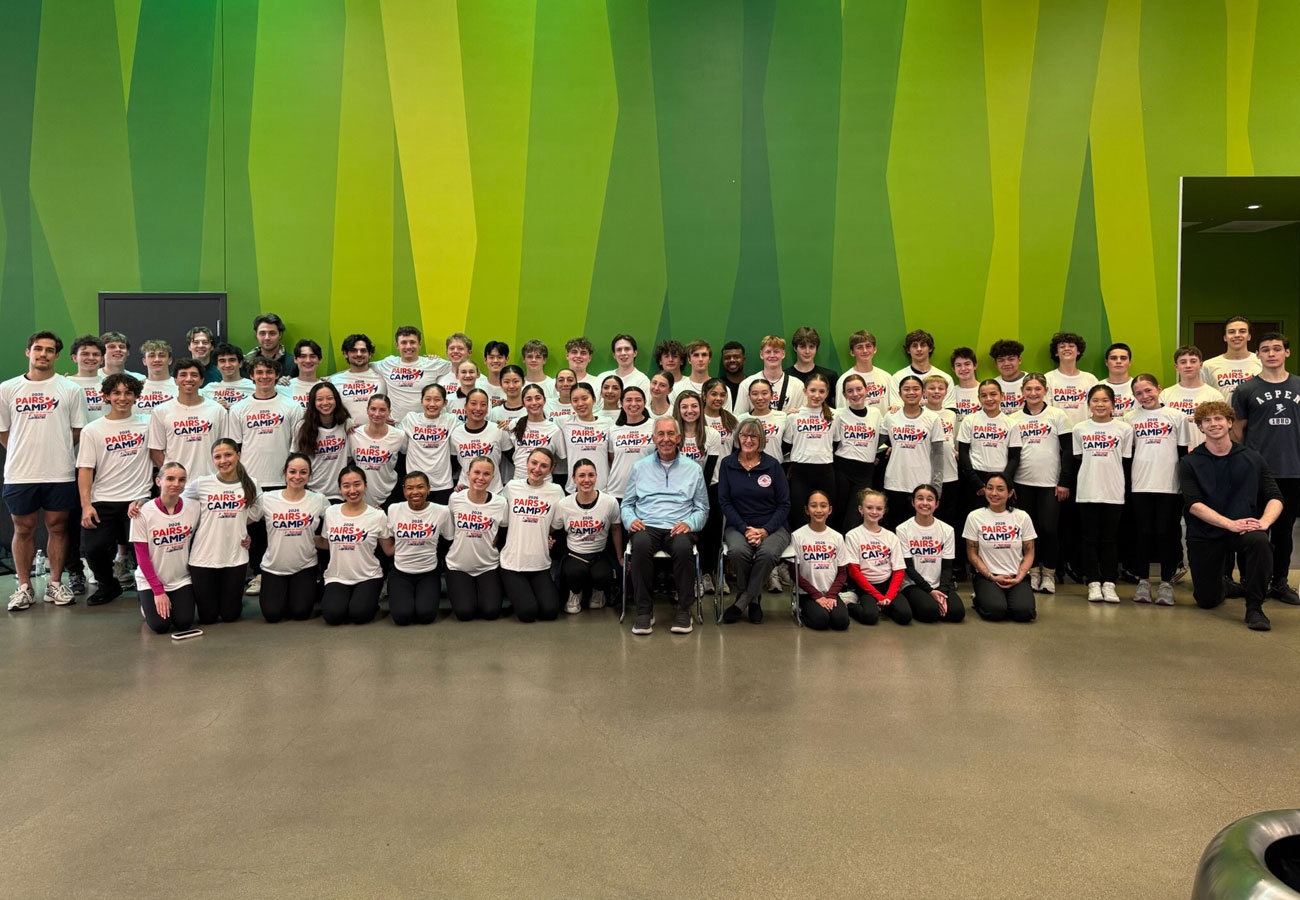
Future Olympic hopefuls know that success requires more than talent and training. At the 2026 U.S. Figure Skating McMillan Pairs Camp, Caralee Hammer Frederic shared Gottman Method principles that help partners build trust, communicate effectively, and perform at their best.
Caralee Hammer Frederic, LCSW
Recently, I had the privilege of presenting my workshop, “Elite Couples On & Off the Ice,” at the 2026 U.S. Figure Skating McMillan Pairs Camp in Highlands Ranch, Colorado.
The McMillan Pairs Camp is an exclusive annual training event organized by U.S. Figure Skating and hosted by Bob and Sharon McMillan. It brings together some of the nation’s most promising pairs skaters and coaches. As I looked around the room, I saw athletes who have dedicated countless hours to mastering their craft and pursuing excellence at the highest levels of competition. Many of these young athletes have their sights set on future national, world, and Olympic competition.
Watching them interact with their skating partners reminded me of something I often teach therapists, couples, and leaders: success is rarely an individual achievement. It is built on relationships.
Pairs figure skating is one of the most relationship-dependent sports in the world. Athletes must trust one another completely. They must communicate clearly under pressure. They must navigate disappointment, conflict, setbacks, and stress while maintaining focus on a shared goal.
In many ways, the challenges they face are similar to those experienced by couples, business partners, and teams.
The lifts, throws, and jumps may earn points — but trust, communication, and teamwork make them possible. I’m excited to watch these athletes shine on the road to the next Winter Olympics.
During the workshop, I shared principles from more than four decades of Gottman research, focusing on trust, communication, emotional connection, conflict management, and partnership. While these principles are often associated with romantic relationships, they are equally relevant to any partnership where people depend on one another to succeed.
One of the messages I emphasized is that strong partnerships are not built through grand gestures. They are built through hundreds of small moments of connection, responsiveness, respect, and support. The healthiest and most successful partnerships develop a culture of trust over time.
What impressed me most was the athletes’ willingness to engage with these concepts. Elite performers understand the value of practice. They know that excellence is achieved through intentional effort, repetition, and continuous improvement. The same is true for relationships.
The skills that help athletes become better partners off the ice can also help them perform more effectively on the ice.
I left the camp inspired by the talent, dedication, and character of these young athletes and their coaches. It was an honor to spend time with them and contribute in a small way to their development.
As they continue their journey toward future national and Olympic competition, I will be cheering them on. Not only because of what they can accomplish athletically, but because of the strong partnerships they are building along the way.
After all, great performances often begin with great relationships.